



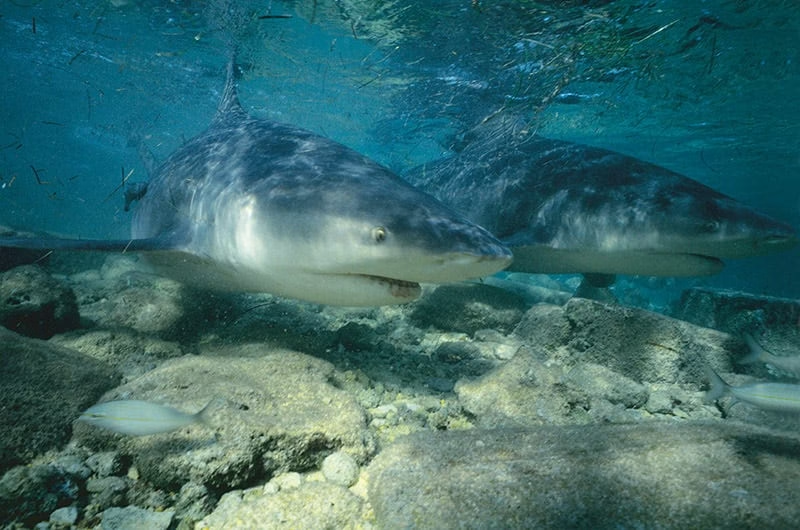
Few natural phenomena in Central America are as captivating as the bull sharks of Lake Nicaragua, a freshwater body that has quietly hosted these oceanic predators for more than 100 years. Known locally as tiburones toro, these formidable fish have turned Nicaragua’s largest lake into a global curiosity and a powerful draw for eco‑tourists, biologists, and adventure seekers.
Lake Nicaragua, also called Lago Cocibolca, covers about 8,200 square kilometers and is the largest lake in Central America. What makes it unique, however, is that it is one of the only lakes in the world where bull sharks (Carcharhinus leucas) live and breed in freshwater. For decades, people believed these were a separate, endemic “Lake Nicaragua shark” species, trapped when ancient volcanic activity transformed what was once a saltwater bay into a vast inland lake. Modern research has shown instead that the sharks are the same bull shark species found along tropical coasts worldwide, with the remarkable ability to thrive in both salt and freshwater environments.
Bull sharks reach around 3–3.5 meters in length and can live 20–30 years or more, making them long‑lived, resilient predators. They move from the Caribbean Sea into the San Juan River and then up into the lake, using its warm, slow‑moving waters as a nursery for their young. Their physiology allows them to regulate salt levels in their bodies, so they can function in both marine and freshwater habitats.
Historically, Spanish explorers and early travelers wrote about freshwater sharks in Nicaragua as early as 1526. By the 19th and 20th centuries, reports from local residents and foreign observers described sharks that had attacked bathers near the shores of Granada and other towns, adding to the lake’s almost mythical reputation. Scientists later confirmed that bull shark attacks in the lake are rare but possible, especially in shallow, murky waters where visibility is poor. Overall, the statistical risk remains extremely low, and most visitors enjoy the lake safely for fishing, boating, and island‑hopping around places like Ometepe.
Ecologically, bull sharks play a key role in Lake Nicaragua’s ecosystem. As apex predators, they help control populations of fish such as tarpon and other large species, maintaining a natural balance. Researchers have also documented that female bull sharks give birth in the lake‑river system, reinforcing the idea that this environment is not just a temporary stopover but a functional part of their life cycle.
Today, overfishing, river siltation, and changes to the San Juan River have contributed to a noticeable decline in the number of bull sharks in Lake Nicaragua. Conservationists stress the importance of protecting these sharks and their habitat, both to preserve biodiversity and to sustain responsible tourism. Visitors can support this by choosing certified eco‑tours, following local guidelines around swimming and diving, and spreading awareness about the lake’s unique wildlife.
For travelers, the bull sharks of Lake Nicaragua are more than a biological curiosity—they are a living symbol of the region’s extraordinary natural history. Whether you’re exploring the quiet shores of Granada, hiking volcanic Ometepe Island, or drifting through the lake’s calm waters, knowing that bull sharks have inhabited these waters for well over a century adds a thrilling, almost cinematic depth to every reflection on the placid surface of Cocibolca.
—
Tiburones toro habitan en el lago de Nicaragua desde hace más de un siglo
Pocos fenómenos naturales en Centroamérica son tan fascinantes como los tiburones toro del lago de Nicaragua, un gran cuerpo de agua dulce que ha albergado a estos depredadores oceánicos durante más de 100 años. Conocidos localmente como tiburones toro, estos imponentes animales han convertido al lago más grande de Nicaragua en una curiosidad mundial y un gran atractivo para turistas ecológicos, biólogos y amantes de la aventura.
El lago de Nicaragua, también llamado Lago Cocibolca, abarca cerca de 8.200 kilómetros cuadrados y es el lago más grande de Centroamérica. Lo que lo hace especial es que es uno de los pocos lagos del mundo donde los tiburones toro (Carcharhinus leucas) viven y se reproducen en aguas dulces. Durante mucho tiempo, se creyó que eran una especie endémica, llamada “tiburón del lago de Nicaragua”, atrapada cuando antiguas erupciones volcánicas transformaron una bahía salada en un gran lago interior. Estudios modernos han demostrado que, en realidad, se trata del mismo tiburón toro que se encuentra en costas tropicales de todo el mundo, con la capacidad excepcional de adaptarse tanto al agua salada como al agua dulce.
Los tiburones toro pueden alcanzar unos 3–3,5 metros de longitud y vivir entre 20 y 30 años o más, lo que los convierte en depredadores grandes y longevos. Acceden al lago desde el mar Caribe, nadando por el río San Juan hasta llegar al lago, donde utilizan sus aguas cálidas y tranquilas como criadero para sus crías. Su fisiología les permite regular los niveles de sal en su cuerpo, por lo que pueden sobrevivir tanto en el mar como en el agua dulce.
Desde hace siglos, exploradores y viajeros han descrito tiburones en el lago. Las primeras crónicas españolas ya mencionaban tiburones de agua dulce en Nicaragua en el siglo XVI. En los siglos XIX y XX, habitantes locales y observadores extranjeros narraron ataques de tiburones a bañistas cerca de las playas de Granada y otras poblaciones costeras del lago, lo que añadió al lugar un aire mítico y casi legendario. Los científicos han confirmado que, aunque los ataques son raros, pueden ocurrir, sobre todo en aguas poco profundas y turbias donde la visibilidad es reducida. Sin embargo, la probabilidad de que un turista sea atacado es extremadamente baja, y la mayoría de los visitantes disfrutan del lago sin riesgos, practicando pesca, navegación y excursiones a islas como Ometepe.
Desde el punto de vista ecológico, los tiburones toro son depredadores clave en el ecosistema del lago. Controlan poblaciones de peces grandes como los sábalo y otros depredadores, contribuyendo a mantener el equilibrio natural. Además, se sabe que las hembras dan a luz tanto en el río como en el lago, lo que muestra que este sistema fluvial‑lacustre es un hábitat funcional para su ciclo de vida, no solo un paso temporal.
En las últimas décadas, la sobrepesca, la sedimentación en el río San Juan y otros cambios en el entorno han reducido el número de tiburones en el lago. Los expertos en conservación subrayan la necesidad de proteger estas especies y su hábitat, no solo para preservar la biodiversidad, sino también para mantener un turismo sostenible. Los viajeros pueden apoyar este esfuerzo eligiendo tours ecológicos certificados, respetando las indicaciones locales sobre dónde bañarse o bucear, y compartiendo información sobre la importancia de los tiburones toro del lago de Nicaragua.
Para quienes visitan el país, los tiburones toro del lago Cocibolca son mucho más que un dato curioso: son un símbolo vivo de la riqueza natural de Nicaragua. Ya estés navegando en calma hacia las islas, caminando por los volcanes de Ometepe o disfrutando el atardecer desde las orillas de Granada, el hecho de que estos tiburones han habitado el lago desde hace más de un siglo le da un sabor inolvidable a cada viaje al corazón de Nicaragua.
—
标题:尼加拉瓜湖牛鲨已栖息一百多年
在中美洲,鲜有自然奇观能比尼加拉瓜湖的“牛鲨”更令人着迷。这座巨大的淡水湖在过去一百多年里,悄然养育着这些来自海洋的掠食者。当地人称它们为“牛鲨”(tiburones toro),它们不仅让尼加拉瓜最大的湖泊变成了全球瞩目的生态奇观,也成为生态旅游、科学研究和探险游客的重要吸引点。
尼加拉瓜湖(又称“科西沃尔卡湖”,Lago Cocibolca)面积约为8,200平方公里,是中美洲最大的湖泊。其独特之处在于,它被公认为全球为数不多的能够容纳“牛鲨”(Carcharhinus leucas)在淡水环境中长期生存和繁殖的湖泊之一。过去,人们曾认为湖中的鲨鱼是一个独立的“尼加拉瓜湖鲨”物种,因古代火山活动将一座海港封入内陆而形成了这一特殊淡水种群。但现代科学证实,这些鲨鱼本质上就是遍布热带海岸的牛鲨,只是它们具备独特的生理机制,可以在淡水与海水之间自由切换生存。[unl +3]
牛鲨体长可达3至3.5米,寿命可达20至30年甚至更久,属于体型大、寿命长的顶级掠食者。 它们从加勒比海进入圣胡安河,再逆流而上进入湖泊,利用这里温暖、水流平缓的水域作为幼鲨的育幼场。它们肾脏、鳃和直肠腺等器官可以调节体内盐分,因此即便进入淡水也能正常生活。
早在16世纪,西班牙探险家的文献中就记载了尼加拉瓜的“淡水鲨鱼”。 19至20世纪,许多外国使节和本地居民也记录了鲨鱼袭击湖岸附近游泳者的故事,尤其在格拉纳达等城市附近,这为湖泊增添了神话般的色彩。 科学家指出,这类攻击非常罕见,只在浅水、浑浊且能见度低的水域中偶有发生。整体来看,袭击概率极低,大多数游客在湖中划船、垂钓、参观奥梅特佩火山岛等区域时都非常安全。
从生态角度看,牛鲨在尼加拉瓜湖的生态系统中扮演着“生态调节者”角色。它们捕食大型鱼群(如马林、锯鳐等),帮助维持湖泊中鱼类种群的平衡。 研究还发现,雌性牛鲨在湖泊与河流交界处产仔,表明这一系统不仅是临时栖息地,更是其完整生命周期的重要环节。
近年来,过度捕捞、圣胡安河泥沙淤积以及环境变化导致牛鲨数量明显减少。 保护主义者呼吁加强对其栖息地的保护,以维护湖泊的生物多样性和可持续旅游发展。游客可以通过选择认证的生态游船线路、遵循当地的游泳与潜水安全提示、并积极传播尼加拉瓜湖鲨鱼的生态价值,为这一珍贵自然资源撑起保护伞。
对旅行者而言,尼加拉瓜湖的牛鲨不仅是一种科学奇观,更是一种活生生的“国家象征”。当你在湖面享受宁静的船行、在奥梅特佩火山岛徒步,或在格拉纳达的湖岸边看日落时,若心中回响着“牛鲨已在这些湖水中游弋一个多世纪”的故事,那每一次湖面的涟漪,都仿佛在讲述一段关于自然与时间的传奇。