Home Blog Page 30

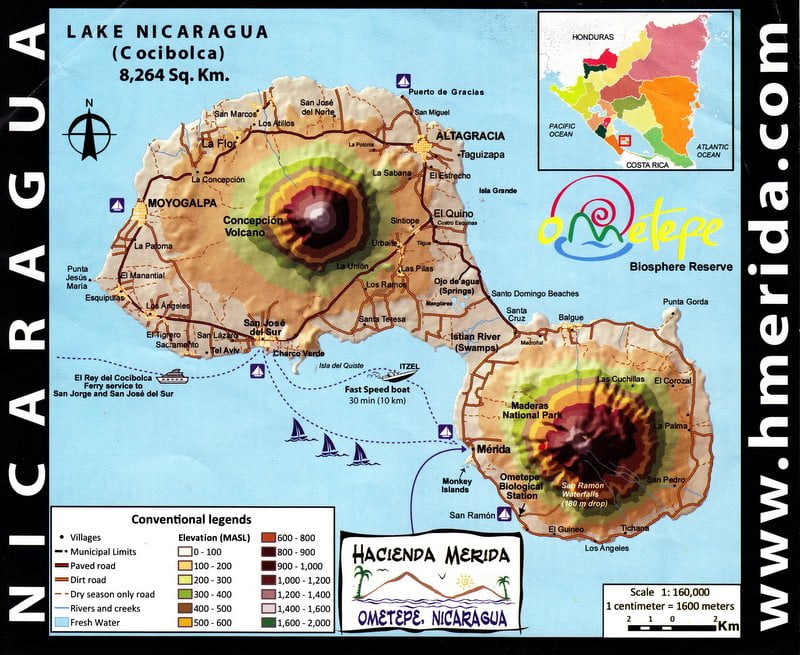
Map of the enchanting island of Ometepe

0
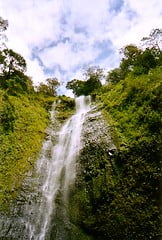
Ometepe Cascade
Ometepe Cascade (Photo credit: bhlogiston)
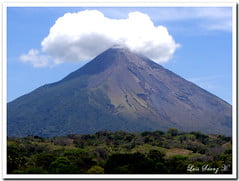
The island Ometepe seen from the shore. Concep...
The island Ometepe seen from the shore. Concepción volcano in the left, Maderas in the right. (Photo credit: Wikipedia)
Solentiname y Ometepe
Solentiname y Ometepe (Photo credit: Wikipedia)
ometepe_052
ometepe_052 (Photo credit: Mr. Luigi)
Enhanced by Zemanta

Fashion – new …doo in Nicaragua

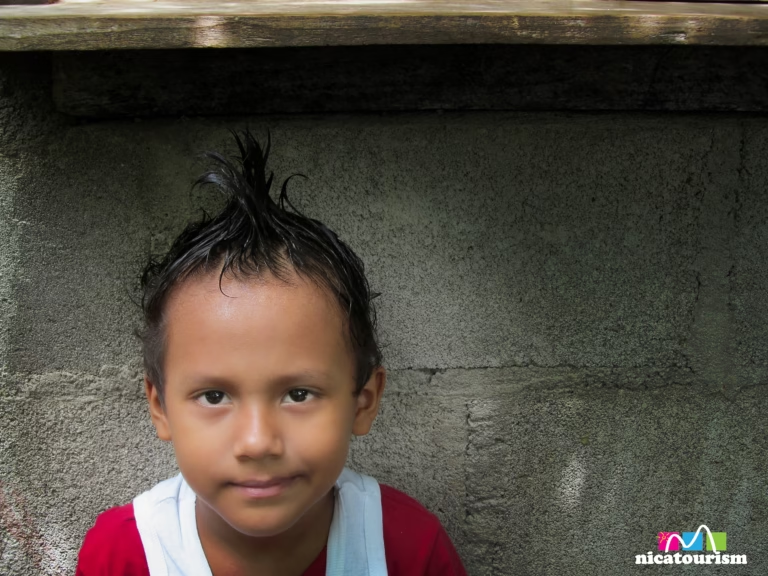
This Nicaraguan lad is not that far behind fashion…or better said: “Fashion has made it to Granada, Nicaragua”.  It’s interesting what a little water and imagination can do.

No está tan fuera de moda este chavalo…o mejor dicho: “La moda ha llegado a Granada, Nicaragua.”  Que bueno lo que se puede hacer con agua y una buena imaginacion.

这个尼加拉瓜小伙子在时尚方面并不落后……或者更确切地说:“时尚已经来到尼加拉瓜的格拉纳达了”。一点水和想象力能创造出多么有趣的东西啊。

Enhanced by Zemanta

“Rundown soup’s” on in Nicaragua – The Denver Post

0

From Evernote:

"Rundown soup’s" on in Nicaragua – The Denver Post

Clipped from: http://www.denverpost.com/food/ci_19905892

A Moveable Feast | John Henderson

"Rundown soup’s" on in Nicaragua

Posted:   02/08/2012 01:00:00 AM MST

By John Henderson
The Denver Post

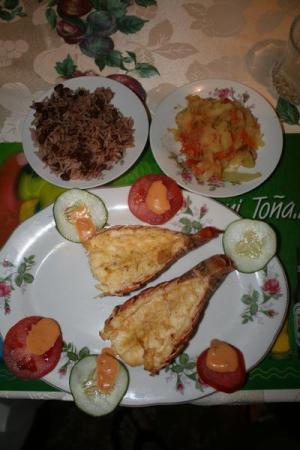
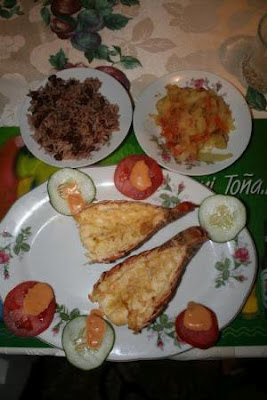
Lobsters in garlic sauce from Mari’s restaurant.

LITTLE CORN ISLAND, Nicaragua — The batch of soup in the giant black pot looked like a witch’s brew, which probably isn’t a good association to make in Nicaragua. Politics in this country have been so dangerous you needed a scorecard to keep track of the good guys and bad guys, their switching allegiances and the foreign interests that supported them.

But Nicaragua, the second-poorest nation in the Western Hemisphere, has come out of the cold age of revolution to open up a whole new world of travel for those tired of Central America’s usual gallo pinto trail (the standard beans-and-rice dish of the region).

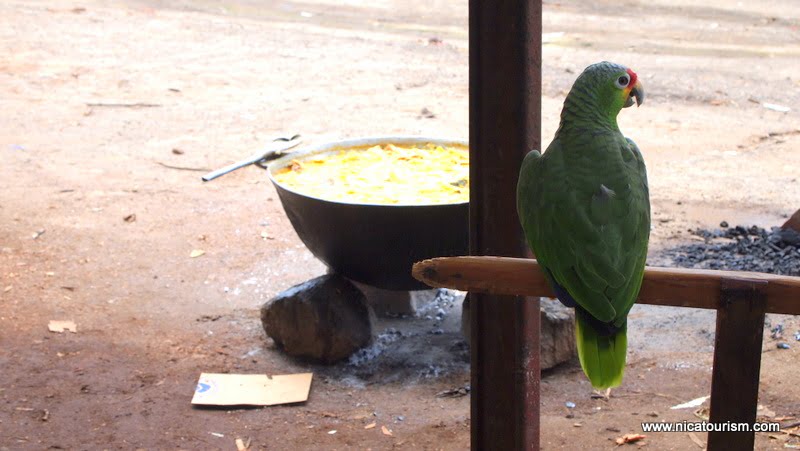
This is why I was on Little Corn Island, a gorgeous speck of an isle in the Caribbean, staring into the murky depths of a soup of unknown origin. The pot of soup looked like a murder scene. Bones and long, round objects stuck up from a yellowish broth like mangled limbs in a brackish swamp.

Chunks of fresh kingfish caught that day surfaced as I explored with a spoon.

In Nicaragua, this is called rundown soup, named for how anything they have lying around is "run down" into a stew. Served in bowls big enough to train scuba divers, rundown soup will fill you up until your next vacation.

Mixed with coconut milk, margarine, plantains and onion, it’s a tasty, hearty stew if you can ignore the long hunks of a vile plant called cassava, the taste of which was never explained by Latin American explorers from the past or by Latin Americans in the present.

Considering the setting, I got the impression Robinson Crusoe may have had the same meal. My dining experience came in an open-air bamboo shelter with a sandy floor just 60 feet from the warm, gentle surf of the Caribbean.

The Corn Islands are where rustic paradise meets modern convenience. You have to look hard to find Mari’s restaurant on Big Corn Island, Little Corn’s big brother to the south.

The crude sign on her stately white wood house looks like something a hitchhiker would hold. But many Nicaraguans on the Caribbean sell meals out of their homes. It’s the island way, mon. After all, here they consider themselves Caribbean more than Nicaraguan. English, not Spanish, is their first language.

That’s why I sat and conversed on Mari’s front porch surrounded by bougainvilleas, azaleas and hibiscuses with the Caribbean Sea just across the street.

As the sun set and the shadows stretched across the sand, Mari’s daughter brought me two 4-ounce lobsters smothered in garlic sauce. Good luck finding a better atmosphere at a five-star restaurant on Martinique. And if you find one that serves lobster in garlic sauce for the $10 I paid, you’re probably a relative.

One habit I always keep when I eat on the road (it doesn’t matter if it’s Nicaragua or Nebraska): Ask the locals where they eat. A cab driver and my hotel clerk on Big Corn led me to Fisher’s Cave, a two-story restaurant overlooking the small harbor where fishing boats bob up and down on the sea.

On a postcard-perfect 80-degree evening in the middle of January, I sat near a local family of four speaking in an odd patois of Caribbean pidgin English and a local guide with long, beaded hair.

I ordered a fried fish filet that nearly covered my plate. Lightly breaded, it came with a pink sauce of mayonnaise and what the young waitress curiously called "something red." For about $6.50, the light yellowtail was priced about half of what it tasted like.

You don’t necessarily come to Nicaragua for the seafood, however. The street food is terrific if, occasionally, dangerous.

Managua is now considered one of the safer capitals in Central America, which is like being one of the safer cities in Afghanistan.

However, the street stalls around the corner from my $15-a-night hotel in Managua’s ghetto were safe. At about 11 p.m. an old woman in even older glasses and a leopard-skin blouse stood behind glass cases holding local dishes in various forms.

Black rice cakes that looked just like hockey pucks were piled next to big triangle enchiladas fried to a golden brown. I bit into a piping-hot mixture of rice and chicken that probably wouldn’t make Gordon Ramsay swoon but tasted perfect after a long night sampling Nicaragua’s exquisite Flora de Cana rum.

No one here talks of revolution anymore. In Nicaragua, soup is on.

John Henderson: 303-954-1299, jhenderson@denverpost.com, twitter.com/johnhendersonDP

Sopa de albondiga


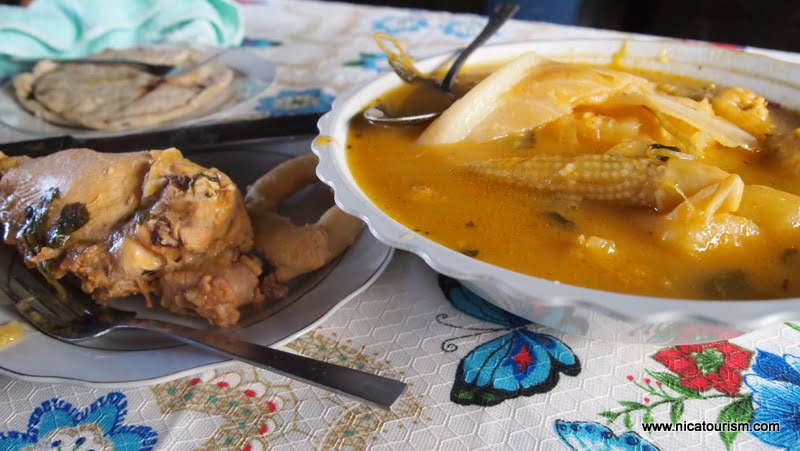
Everybody was waiting for their bowl of soup last Saturday in Granada.  That huge boiling pot was home to a chicken dumpling soup, famous throughout Nicaragua.  Chocked full of local Nicaraguan vegetables like yucca, corn on the cob, tender corn on the cob, cabbage, yautia, condiments, chicken and the famous corn mash dumplings, it is one of my favorites.
Todo el mundo esperaba su taza de sopa el día sábado en Granada.  Aquel perol gigante estaba herviendo con sopa de albondiga, famosa en todo Nicaragua.  Repleta de verduras Nicaragüenses como yuca, elotes, chilotes, repollo, quequisque, condimentos, pollo y las famosas albondigas hechas de masa de maíz, es una de mis favoritas.

Lasagna a la nica

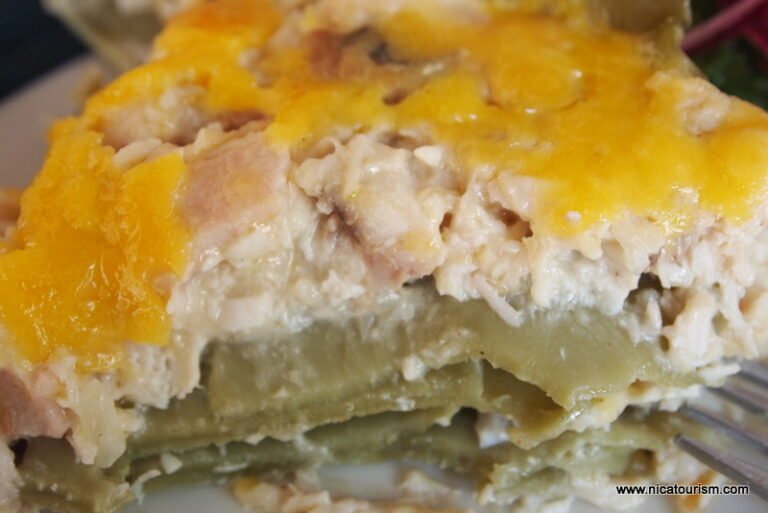
We had a yummy lunch yesterday in Granada, Nicaragua.  It was white chicken lasagna (with spinach pasta), salad and dragon fruit punch, cooked up by our friend Jandra.

Ayer tuvimos un almuerzo rico en Granada, Nicaragua.  Fue lasagna de pollo (con pasta de espinacas), ensalada y fresco de pitaya, preparado por nuestra amiga Jandra.

LaRepublica.net – Nicaragua: Ventaja fronteriza

0

From Evernote:

LaRepublica.net – Nicaragua: Ventaja fronteriza

Clipped from: http://www.larepublica.net/app/cms/www/index.php?pk_articulo=5330023

Inversiones en turismo, industria e infraestructura son realidad

Nicaragua:Ventaja fronteriza

Del lado tico faltan empleo y servicios


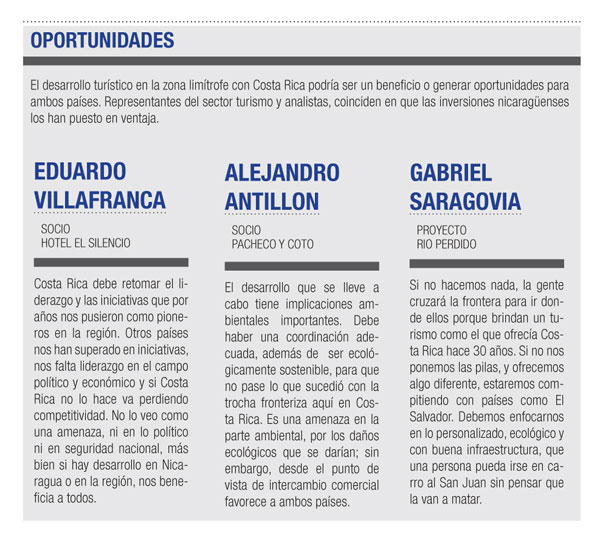
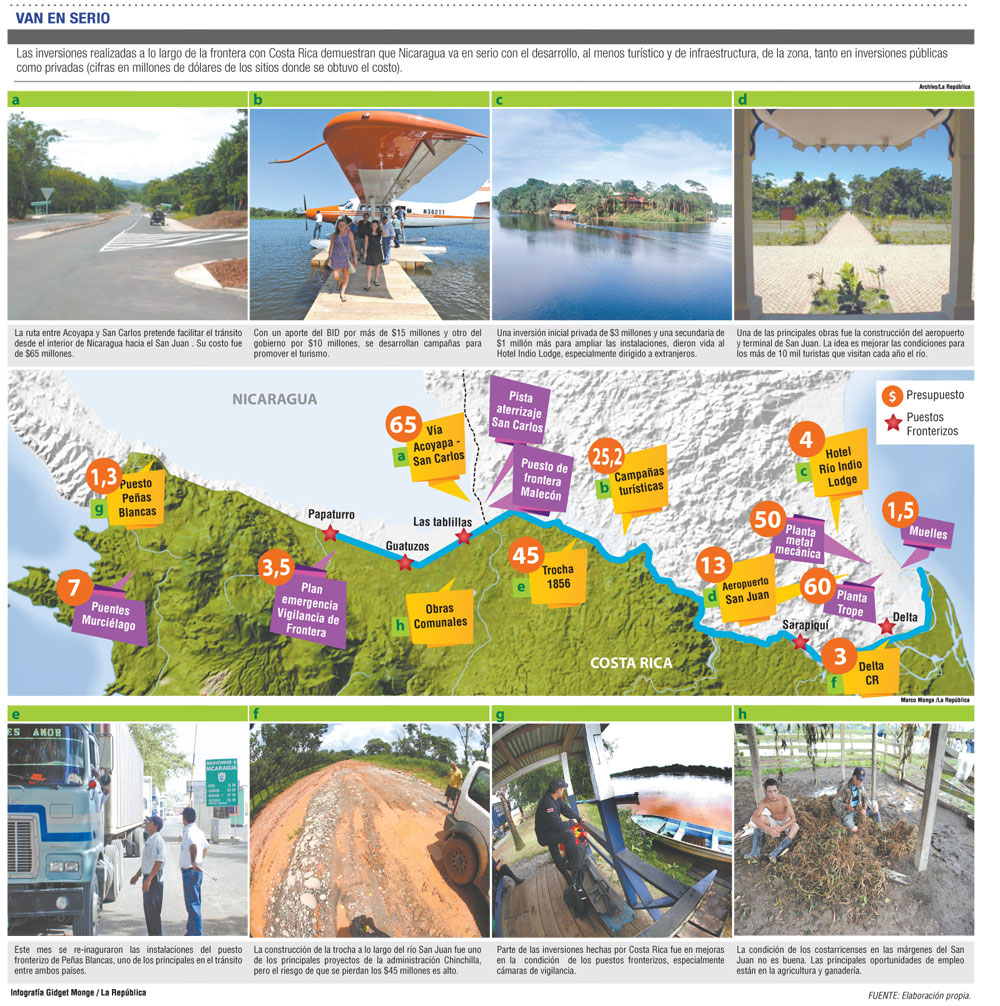
Nicaragua ha tomado ventaja sobre Costa Rica en desarrollar su frontera a lo largo del río San Juan, con inversiones públicas y privadas que en los últimos años suman ya $218 millones.

Mientras tanto, del lado costarricense los proyectos se han limitado a algunas inversiones que no pasan de los $60 millones, sobre todo en la construcción de la trocha, de la cual varias partes ya están colapsando.

Para Nicaragua, la promoción turística es uno de los principales objetivos, pero también hay nuevos desarrollos industriales.

Para ello, ha realizado fuertes inversiones en infraestructura, especialmente en nuevos muelles, puestos fronterizos, pistas de aterrizaje y carreteras de acceso.

Las obras se han hecho a lo largo de la frontera con Costa Rica, especialmente en los accesos al río San Juan, ubicados en su nacimiento en San Carlos de Nicaragua, y en su desembocadura frente a Isla Calero.

El último proyecto fue la inauguración hace un par de meses de un nuevo aeropuerto en la antigua comunidad de Greytown, hoy conocida como San Juan del Norte.

En este pequeño poblado costero —ubicado a unos 3 kilómetros de Calero— se invirtieron unos $13 millones en una moderna y cómoda pista de aterrizaje, para aprovechar el turismo futuro.

De esta forma, proyectos turísticos como el recién inaugurado Hotel Indio Lodge, en la Reserva de Indio Maíz, con una inversión de $4 millones, cercanos al pueblo, tendrían una conexión directa con el turista foráneo.

Todos los proyectos se promocionan mediante las campañas Ruta de Agua, de $15 millones, financiada por el Banco Interamericano de Desarrollo, y “Yo Conozco el San Juan, ¿y vos?”, de $10 millones.

En cuanto a la industria, la comunidad celebró la reciente llegada de la firma japonesa Trope, dedicada al ensamblaje de vehículos.

Además el gobierno nicaragüense inició negociaciones con una empresa de metalmecánica que invertiría otros $50 millones.

Otro importante proyecto en la zona consiste en una nueva plantación de palma africana, tras una inversión multimillonaria de un grupo empresarial centroamericano, sobre todo guatemalteco.

Pero mientras Nicaragua mueve todos estos recursos para desarrollar la zona, del lado costarricense la preocupación ha sido solo la de mejorar las condiciones de seguridad de la policía de fronteras y construir la ruta paralela al río.

En lo primero el gobierno había aprobado apenas $3,5 millones, así como otros rubros menores en colocar cámaras y llevar electricidad a algunas zonas que no la poseían.

El segundo gran proyecto —la trocha— se ha topado con el escándalo por el supuesto manejo irregular de los fondos, así como el aparente colapso de varias secciones del camino.

Mientras tanto las condiciones de los costarricenses del lado sur del río son precarias.

En poblados como Tambor deben vivir con constantes inundaciones durante la época lluviosa, sin acceso a teléfonos públicos y mucho menos señal celular.

En otros poblados cercanos, entre Boca San Carlos, Tiricias y Boca del Sarapiquí, la electricidad apenas llegó hace algunos meses, mientras las opciones de educación para los niños se encuentran a varias horas a pie.

Las opciones de empleo son limitadas, pues no hay empresas que desarrollen servicios o requieran mano de obra, y el gobierno no ha tenido una respuesta clara.

“Lamento mucho los atrasos, pero son una muestra de la realidad actual, existen muchos trámites burocráticos que atrasan las obras”, dijo Francisco Chacón, ministro de Comunicación.


Luis Valverde

lvalverde@larepublica.net


Colaboró la periodista Marycarmen Rojas

Rosquillas

Would you like some rosquillas?  They are a typical cookie/cracker type food from Nicaragua, made with a corn meal base.  Some versions are salty and others, like the ones in the picture, are covered with molasses and sugar.  Many areas of Nicaragua claim that their rosquillas are the originals and the best, places like El Viejo (Chinandega), Santo Tomás (Chontales) and Rivas (Rivas).  I’ll take any of them with a nice cup of strong Nicaraguan coffee.  Ahhhhh!

¿Te gustaría comer unas rosquillas?  Son una galleta típica de Nicaragua, hecha a base de masa de maíz.  Algunas son saladas y otras son dulces, como las que salen en las fotos, cubiertas de melaza y azucar granulado.  Diferentes zonas de Nicaragua afirman que sus rosquillas son las originales y las mejores, lugares como El Viejo (Chinandega), Santo Tomás (Chontales) y Rivas (Rivas).  Yo me las como de cualquier lugar con una taza de café Nica fuerte.  ¡Ahhhh!

Lemonade <...> Limonada

I had a big glass of nice lemonade today in Granada, Nicaragua.  Some would call it limeade cause it was made with what the U.S. calls limes but what Nicaragua calls lemons.  Anyways, it’s a good drink.  You can never go wrong with lemonade.

Bebí un gran vaso de limonada hoy en Granada, Nicaragua.  En EE.UU lo llamarían ‘limeade’ porque la lima es limón y el limón es lima.  De todos modos, es riquísimo.  Nunca te equivocás con la limonada.

Calle Palmira

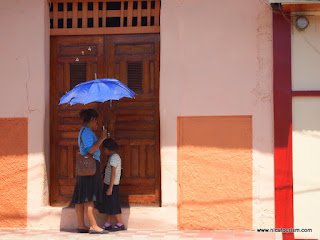
Here’s a typical house in the Palmira section of the touristic town Granada, Nicaragua.

He aquí una casa típica en la calle Palmira, en la ciudad turística de Granada, Nicaragua.