According to The Travel Channel Nicaragua was the 7th happiest country in the world. Now, admittedly, things have changed a bit since that article was written in 2013. Nicaragua has objected to a much more pessimistic outlook since clashes among its citizens spurred violence and unrest in the sleepy Central American country.
Although the country’s economy and tourism have taken a big hit, there is really no reason that Nicaragua should still not be considered an excellent tourist destination. It has much to offer: beaches, mountains, volcanos, ecotourism, and much, much more. The biggest asset Nicaragua has, which has also probably been the main contributor to its unrestful history, is its people: friendly, hard-working, open, and albeit restless. They will continue to welcome visitors with their characteristic hospitality and open arms.
So, I am already planning my next visit to Nicaragua. Is it among the world’s top 10 happiest countries? I don’t know but I am happy when I go to Nicaragua…
Según un reportaje de The Travel Channel, Nicaragua fue el séptimo país más feliz del mundo. Por cierto, las cosas han cambiado un poco desde 2013, cuando se escribió el artículo. En los ojos de muchos, Nicaragua tiene una perspectiva mucho más pesimista: en 2018 enfrentamientos entre ciudadanos robaron la paz en lo que era un tranquilo país centroamericano.
No hay duda: la economía y el turismo del país han sufrido un gran golpe. Sin embargo, no hay razón para que Nicaragua no deba considerarse como un excelente destino turístico. Tiene mucho que ofrecer: playas, montañas, volcanes, ecoturismo y mucho, mucho más. El mayor activo que tiene Nicaragua, que probablemente también ha sido el principal contribuyente a su inquietante historia, es su gente: amigable, trabajadora, abierta e inquieta. Y seguramente ellos continuarán recibiendo visitantes con su característica hospitalidad y con los brazos abiertos.
Entonces, desde ya estoy planeando mi próxima visita a Nicaragua. ¿Está entre los 10 países más felices del mundo? No lo sé…pero estoy feliz cuando voy a Nicaragua …
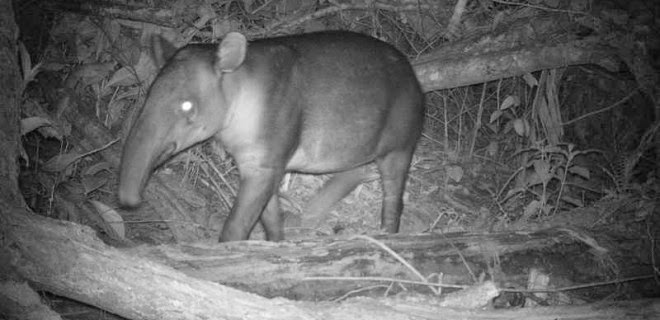
Out for an evening stroll: a tapir is caught on a motion-sensor camera trap on Nicaragua’s Caribbean coast (photo courtesy of Christopher Jordan) By Christopher Jordan / special to The Nicaragua Dispatch October 7, 2013
Along the Caribbean coast of Nicaragua, the country’s largest terrestrial mammal still fulfills its role as “gardener of the forest.”
Baird’s tapirs are shy, rarely seen mammals that reach 400-600 pounds as adults and eat more than 100 different species of leaves, stems, seeds, fruits, and bark. Tapirs—known commonly in Nicaragua as “dantos” in Spanish, “pamka” in Mayangna, “tilba” in Miskito and “mountain cows” in Creole—landscape the forests by munching on vegetation and dispersing seeds as the plod along. Over the centuries, tapirs have played an important role in shaping the lowland tropical rainforests along Nicaragua’s Caribbean coast.
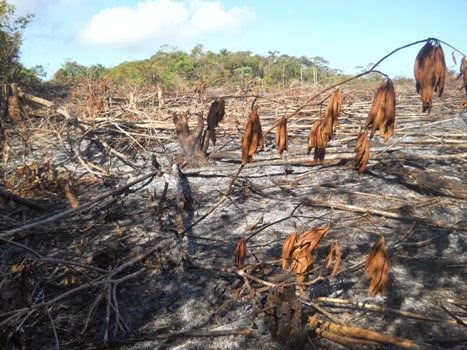
Habitat destruction on the Caribbean coast is a major threat to tapirs in Nicaragua (photo/ Christopher Jordan)
Still, until a few years ago, very little was known about Nicaragua’s tapir population, other than the fact the animal has become a highly endangered species due to poaching and deforestation. Of the some 5,500 tapirs left in Mesoamerica, only 500 are thought to be living in Nicaragua—down from 2,000 several years back, according to local estimates. At the current rate of extirpation, conservationists estimate that Nicaragua’s tapir could become extinct within 20-30 years if action is not taken immediately.
To reverse the trend before it’s too late, the Nicaragua Tapir Project is launching an ambitious conservation campaign to protect the animal, education the population and build the country’s first tapir rescue center. But first conservationists needed to collect some scientific data to learn more about the animal’s range in Nicaragua.
Over the past three years, motion-sensor camera traps have revealed that Nicaragua’s Caribbean coast is one of the largest remaining hotspots for tapir habitat in all of Mesoamerica. Until recently, the country was home to a genetic corridor between the Bosawás Biosphere Reserve in the north and the Indio-Maíz Biosphere Reserve in the south, providing a globally significant segment of the species’ range.
That is the good news. The bad news is that the population faces several critical threats, including: 1) illegal hunting and the inadequate implementation of the national, indefinite tapir hunting ban; 2) habitat destruction driven by the agricultural frontier; 3) the capture of baby tapirs for the illegal pet trade; and 4) the development of oil palm plantations and highways that have bisected the historical Caribbean coast tapir genetic corridor.
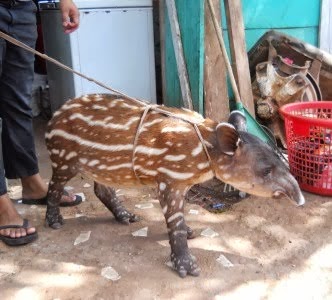
An illegally captured tapir in Bilwi (photo/ Christopher Jordan)
Tapirs have a very slow reproductive cycle, with a gestation period of approximately 400 days. After that, a mother will give birth to a single tapir calf, which won’t reach sexual maturity for another 2-4 years. That makes tapirs highly vulnerable to anthropogenic threats that increase their mortality and create obstacles to reproduction.
The future of the species is not entirely bleak, and the Nicaragua Tapir Project is encouraged by recent conservation efforts. The project initiative, a combined effort by the Nicaraguan National Zoo, The Caribbean Coast Regional Autonomous University (URACCAN), Michigan State University, and the Foundation for the Autonomy and Development of the Atlantic Coast of Nicaragua (FADCANIC), includes efforts to track and protect the animal. The project captures wild tapirs to install GPS tracking collars to learn how they are surviving in the wild, and is launching one of the first efforts globally to introduce captive tapirs into natural habitats. In addition, the project focuses on conservation education and the development of territorial laws and regulations to reduce tapir hunting on the Caribbean Coast.
The tapir project also endeavors to build the country’s first tapir rescue, rehabilitation, and re-introduction center in the Wawashang Reserve.
Territorial governments have been strong partners in these efforts, including the Awaltara Territorial Government, which officially banned tapir hunting within its territory in early 2013. The Nicaraguan Army’s Ecological Battalion is also committed, and assists in rescuing tapirs that have been captured in the jungle for the illegal pet trade.
Little by little, Proyecto Tapir Nicaragua is putting Nicaragua on the map for international tapir conservation and calling for much needed attention to this highly threatened but globally important population of animals.
For more information and Nicaraguan Baird’s tapir videos please watch the following clip on Youtube and read “Baird’s tapirs in Nicaragua.”
Please help tapirs in Nicaragua by donating to a crowdfunding campaign to build the country’s first Tapir Rescue Center.
Christopher Jordan is a tapir conservationist who has spent five years working in Nicaragua, most recently on a Baird’s Tapir Research and Conservation Initiative. He is currently in the Wawashang Reserve conducting tapir research. To contact Jordan, write him at: chrisadamjordan@gmail.com
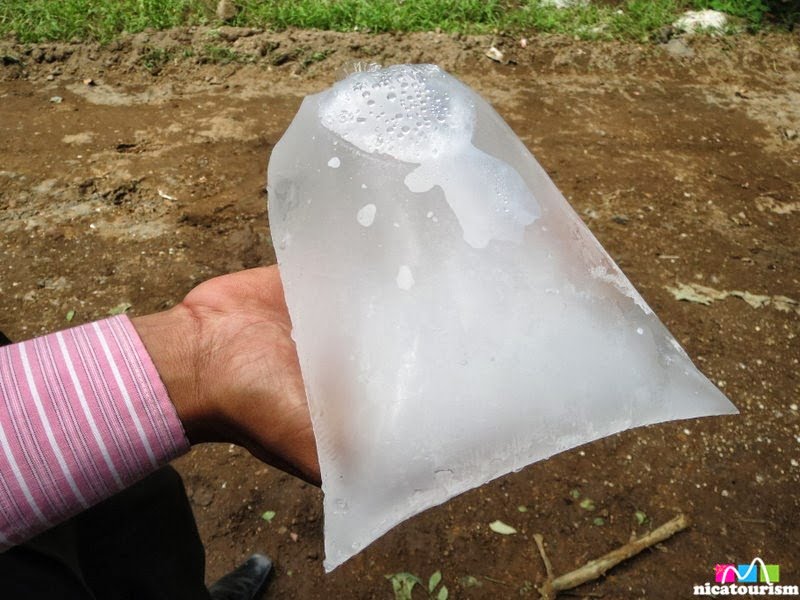
Most people in Nicaragua don’t have refrigerators or freezers. However, everybody wants a nice cool tall drink every once in awhile. Therefore, those with refrigerators (with freezers) often sell ice to their neighbors filling a plastic bag with water and freezing it. At this local store you can buy 25 bags of ice for about $1. Pretty good deal IMHO.
The Mandarin Asian Bistro is a new offering in Chinese food in the Managua, Nicaragua area. The owners did a really nice job of designing and decorating the restaurant…very clean, open and appealing with bamboo and other authentic decorations.
The menu has a good variety of well described plates (both in English and Spanish). We chose some egg rolls, orange chicken (served on a bed of rice noodles) and beef broccoli. A side dish of white rice is included with each plate. The portion of orange chicken was surprisingly small in comparison to the heaping serving of beef broccoli that I got. I was even able to take some of it home with me. Flavor was excellent although my plate was tepid.
Our waiter was attentive and not overly intrusive. He did not pass my empty glass (or bottle) test. He seemed to be watching but was apparently distracted as I finished the last slug of liquid libation.
On a scale of 1 to 10, I give it an 8. Good food, good service, a bit overpriced. Mandarin Asian Bistro is definitely in the top of the Chinese restaurants in the Managua area.
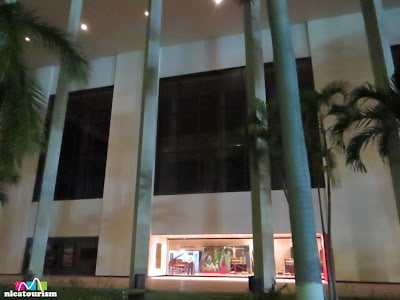
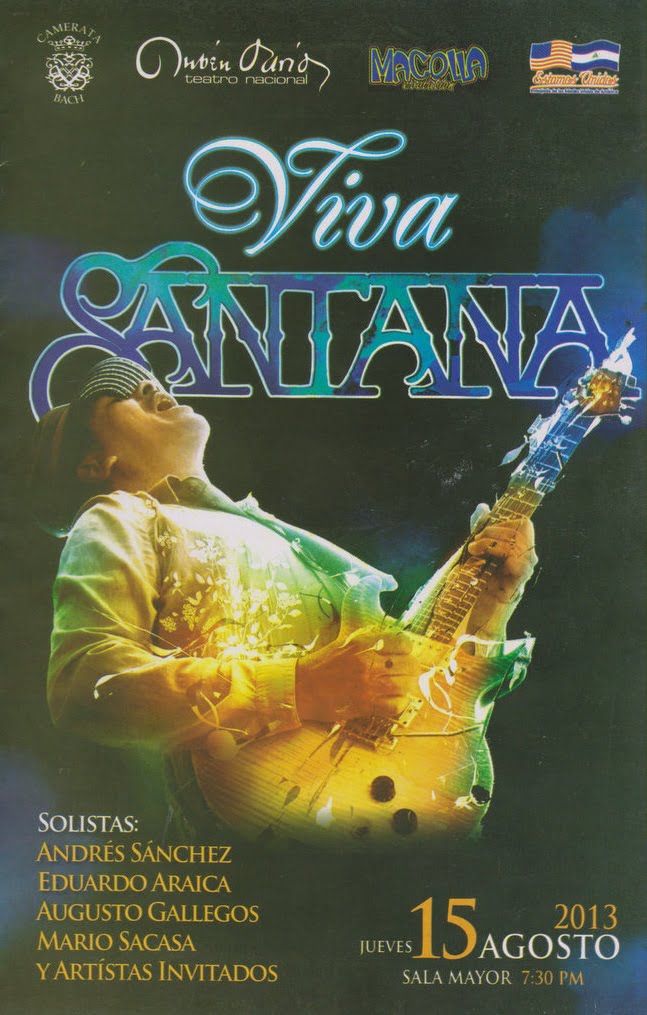
I decided to put my money where my mouth is and go check out a show at the Rubén Darío Teatro Nacional en Managua, Nicaragua. I recently had taken pictures of it from outside and told a little bit about it’s history but it had been quite a few years since I had actually gone (more than 13 years to be exact). The last time I went was to see the Tepenahuatl Ballet Folklórico de Nicaragua (that’s how they spell it) which, by the way, is coming soon to the Rubén Darío Teatro Nacional. If you miss it this time, don’t worry. There are presentations several times a year. You can see the current schedule here.
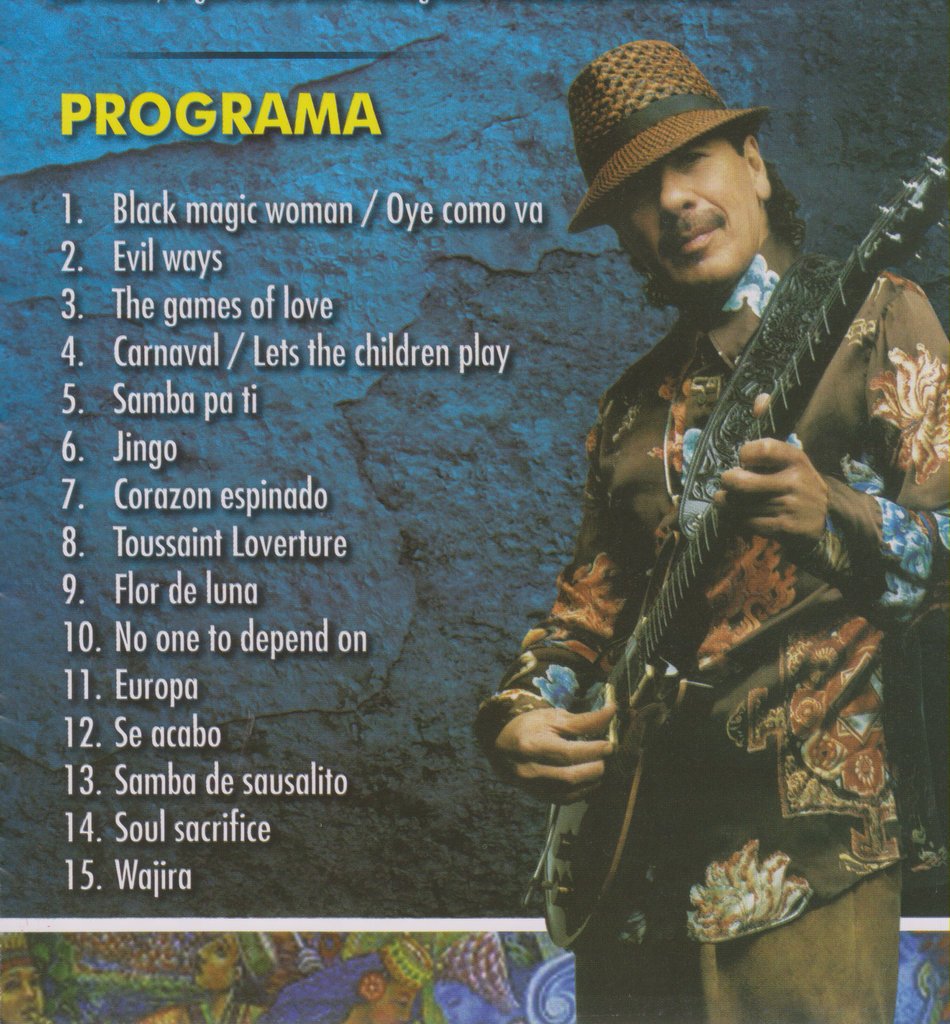
We went to the “Viva Santana” tribute. You can see the playlist below, actually quite a good collection of Santana songs…a bit of the new mixed with the absolute crowd pleasers and songs that have made his music so popular for some 40 years. I didn’t know all the artists but three of the guitar players were really good. A few members of the local Nicaraguan band Macolla also participated. The best vocal rendition, by far, was the cover of ‘Corazón Espinado’, a song by Maná with Carlos Santana lending his trademark guitar wizardry. It was a great show in a great building…all for just a little more than what it costs to go to a movie. Click here see prices for this Viva Santana tribute show at the Rubén Darío Teatro Nacional. Made me want to go to see more live shows, definitely!
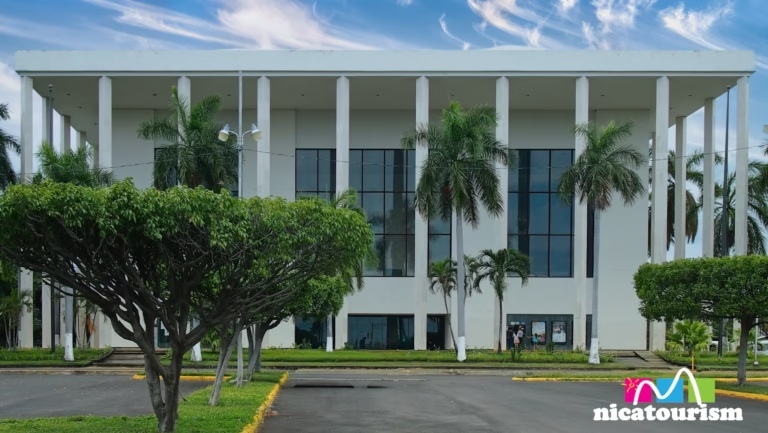
Rubén Darío National Theatre – A Cultural Landmark in Managua (2026)
The Rubén Darío National Theatre remains one of Nicaragua’s most enduring symbols of art and culture. Located along the scenic Lake Managua (Xolotlán) waterfront, this magnificent theatre has been an architectural and cultural landmark for over four decades. Opened in 1969 and named after Nicaragua’s most celebrated poet, Rubén Darío, the theatre stands as a testament to the country’s artistic identity and resilience.
Visitors can enjoy performances ranging from classical music, ballet, and theater to modern Nicaraguan art shows and international guest performances. The main auditorium seats over 1,200 spectators, offering excellent acoustics and elegant, classic design. Beyond performances, the theatre often hosts art exhibitions, conferences, and film festivals, making it a year-round cultural hub.
In recent years, local authorities have invested in revitalizing the waterfront area around the theatre, promoting it as a key destination for both tourists and locals. Nearby, you’ll find restaurants, cafés, and galleries that reflect Managua’s growing urban and cultural energy. Whether you love the arts or simply want to explore an essential piece of Nicaraguan heritage, the Rubén Darío National Theatre is a must-visit stop on your 2026 travel itinerary.
Address: Av. Bolívar, Managua, Nicaragua Hours: Vary by event (check official schedule) Official website:www.tnrubendario.gob.ni Tip: Visit around sunset to enjoy the lakefront views before an evening performance.
Teatro Nacional Rubén Darío – Un Icono Cultural en Managua (2026)
El Teatro Nacional Rubén Darío continúa siendo uno de los mayores símbolos del arte y la cultura nicaragüense. Situado a orillas del Lago Xolotlán (Lago de Managua), este majestuoso teatro ha sido un emblema arquitectónico y cultural durante más de cuarenta años. Inaugurado en 1969 y nombrado en honor al poeta más famoso del país, Rubén Darío, representa el corazón artístico de Nicaragua.
El teatro presenta funciones de música clásica, ballet, teatro y danza moderna, además de servir como sede para presentaciones internacionales de gran prestigio. Su auditorio principal alberga a más de 1,200 personas, y la acústica es reconocida por su excepcional calidad. También se organizan muestras de arte, conferencias y festivales de cine, lo que lo convierte en un espacio cultural activo durante todo el año.
En los últimos años, las autoridades locales han impulsado la renovación del área costera que rodea al teatro, destacando su gran potencial turístico. Cerca encontrarás restaurantes, cafés y espacios culturales donde se vive la energía contemporánea de Managua. Para los amantes del arte o del turismo cultural, el Teatro Nacional Rubén Darío es una parada obligatoria en 2026.
Dirección: Avenida Bolívar, Managua, Nicaragua Horario: Varía según el evento (consultar en la web oficial) Página oficial:www.tnrubendario.gob.ni Consejo: Llega antes del atardecer para disfrutar la vista al lago antes del espectáculo.
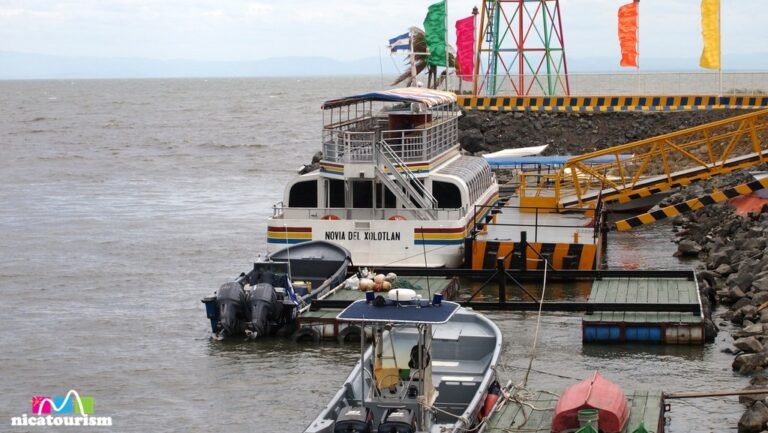
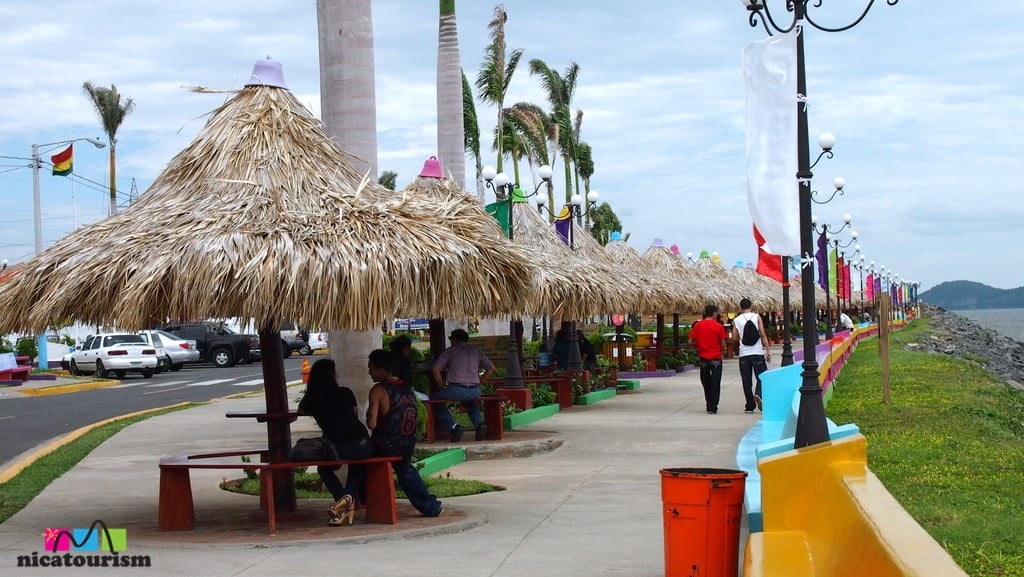
Lake Xolotlán Boardwalk: A Revitalized Gem in Managua, Nicaragua Visitors to Managua, Nicaragua are often pleasantly surprised by the city’s natural charm. The capital, surrounded by lakes and lagoons, is redefining itself as a rising tourism destination. The Lake Xolotlán boardwalk, once neglected for decades, is now experiencing a beautiful transformation. Thanks to the ongoing renovation project led by the Empresa Portuaria Nacional (EPN), the lakefront area has become a lively space for both locals and tourists. The boardwalk features family-friendly parks, trendy restaurants, small cafés, and one of Managua’s most popular attractions — the Lake Xolotlán cruise. Walking along the lakeshore, visitors can enjoy panoramic views of the city, colorful architecture, and the gentle breeze off the lake. As improvements continue, Managua is quickly becoming a must-visit destination within Nicaragua’s growing tourism portfolio.
    El Malecón del Lago Xolotlán: Un Tesoro Renovado en Managua, Nicaragua
    Los visitantes de Managua, Nicaragua pronto descubren que esta ciudad capital posee algo único: una gran cantidad de lagos y lagunas que le dan vida y belleza. El malecón del Lago Xolotlán, después de años de abandono, está viviendo una impresionante renovación.
    Gracias al esfuerzo de la Empresa Portuaria Nacional (EPN), la zona del malecón se ha transformado en un espacio vibrante lleno de parques familiares, restaurantes modernos, cafeterías con vista al lago y el famoso paseo en barco por el Lago Xolotlán.
    Caminar por el malecón es disfrutar de una vista inigualable del lago y del perfil urbano de Managua. Con estas mejoras, la ciudad está consolidándose como uno de los destinos turísticos más atractivos de Nicaragua.
    Palabras clave SEO: turismo en Managua, Lago Xolotlán, malecón de Managua, qué hacer en Managua, viajar a Nicaragua, atracciones en Managua, EPN Nicaragua, paseo en barco Nicaragua.
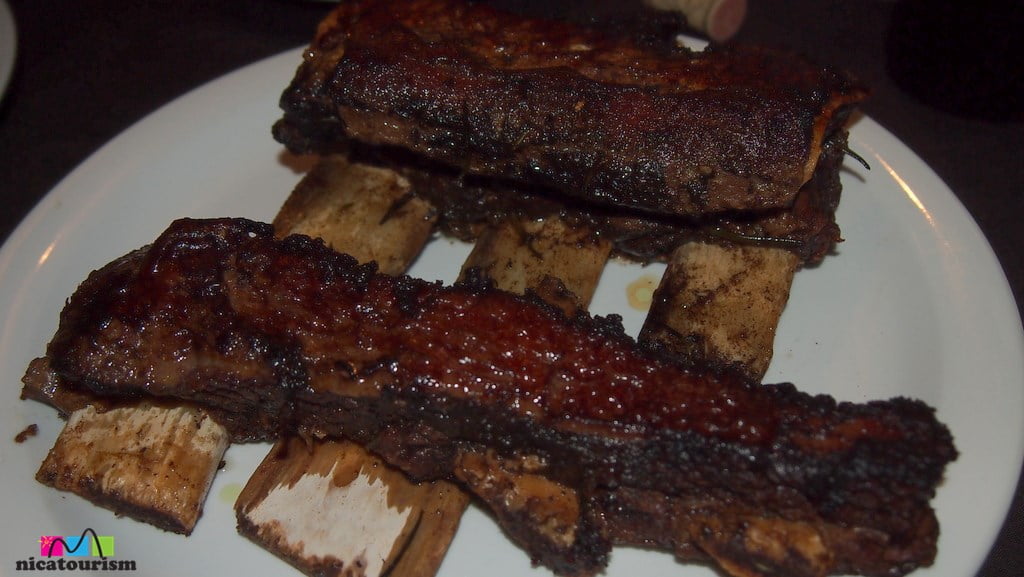
Wow! Had a great dinner tonight at La Casa del Árbol, a Uruguayan restaurant in Managua, Nicaragua. I am a fan of South American fare but, honestly, hadn’t had anything from Uruguay. We savored a sumptious feast called “A Fuego Lento”: a rack of beef ribs with our choice of three side items (salad, grilled vegetales and a stuffed baked potato were our choice). The meat literally fell off the ribs – all I had to use was my fork. The ribs were served with an olive oil and herb dressing that was really good. Anybody know what that is called? Of course, before, it was preceded by a cup of Astica wine from Argentina and an excellent variety of breads. And the grand finale was an excellent flan, served with dulce de leche, a caramel like sweet, washed down by that same great wine.
Jorge, our waiter, was very attentive but never over the top. Great service, great food, great company…what more can you ask for? This was the make-up dinner for a horrible anniversary dinner at ????? (click to read). It more than made up for it…definitely a place to repeat in Managua. Hats off to our friends from Uruguay.
On a scale of 1 to 10, La Casa del Árbol receives a very coveted 9.
This little piggy went to market in Managua, Nicaragua. Actually, somebody probably purchased them and will slaughter these poor pigs Friday or Saturday to make great pork products like chicharrones, nacatamales, pepena, frito, etc. Good shtufff!