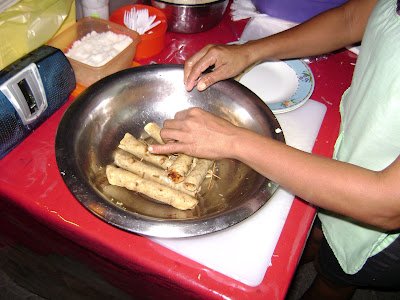
We stopped for the famous LaSalle tacos, made on the street corner of the school with the same name in León. They are served up fresh as you ask for them…a rolled up tortilla with their secret chicken mix inside, deep fried and then topped with cabbage, cream and a lime, onion and chile pepper salad. I washed mine down with an orange Fanta and a Coca-cola. We ate with Karl and Tiffany. The 10 tacos (3,3,2,2) and 5 sodas cost a mere C$130 (US$6.50). Karl Lamy, Tiffany Lamy
Pasamos a comer los famosos tacos LaSalle, hechos en la esquina del colegio con el mismo nombre en León. Los hacen cuando uno los pide…una tortilla enrollado con un pollo especial preparado, frito y luego te echan repollo, crema y cebolla con chile y limón. Yo también tomé dos gaseosas: una Fanta naranja y un Coca-cola. Comimos con Karl y Tiffany. Los 10 tacos (3,3,2,2) y 5 gaseosas costaron solamente C$130 (US$6.50).
Nicaragua: An Up-And-Coming Retirement Destination
Posted: 05/31/2013 7:54 am
Nicaragua offers the lowest cost of living in Central America, and no… there is not a war going on. That ended more than 25 years ago. Today, Nicaragua enjoys a stable democracy and was ranked in a recent Gallup Poll as the safest country in Central America. The Economist Intelligence Unit says Nicaragua is one of the safest countries in all of Latin America.
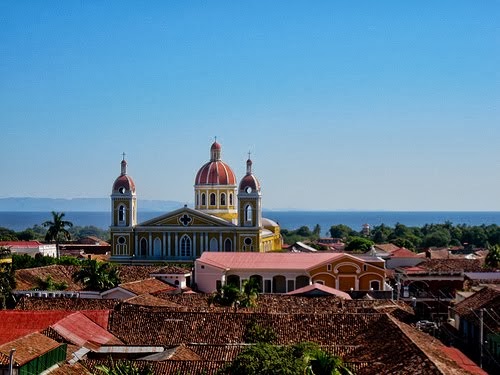
There may be no better place to retire in Nicaragua than Granada. Ancient pastel-painted colonial-era buildings with terracotta tile roofs spill along the north shore of Lake Nicaragua, the largest lake in Central America. Views of the nearby Mombacho Volcano add to this glorious postcard effect.
Granada is known, too, for its colorful horse-drawn carriages that clip clop their way atop cobblestone streets, toting neck-craning tourists and locals alike, the latter going about their daily business with the languid, carefree aura that comes from living in the tropics.
In the enclosed courtyards of the city’s colonial homes — some of which have been converted to boutique hotels and cherished homes, Nicaragua’s famous rocking chairs — made of rich tropical hardwoods and wicker — beckon.
Many are occupied these days by North American retirees — but only for brief moments. They’ve not come to rock away their golden years, but for the active and adventuresome retirement that Nicaragua offers.
By some estimates, as many as 1,000 expats call Granada home — a socially active group that enjoys cultural events, outdoor activities, and volunteer endeavors… and a place where a couple can live quite comfortably for much less than they would pay in the U.S.
“My friends are always asking me, after living here for nine years, when I am going to move back to the United States,” says Janice Gallagher. “I just laugh. I could never afford to have the lifestyle in the U.S. as I do here nor the peace of mind. I can get up in the morning, take a yoga class, get a manicure and pedicure, have a massage, meet my friends for happy hour and do it all for less than $30! I have a housekeeper/nanny, a chauffeur, gardener and someone to take care of the horses and other animals for me for less than $400 a month.”
Janice lives on a small farm just outside of Granada, but she has plenty of friends who live in the city itself. Renting a comfy spot long-term to explore from can cost as little at $500 per month for a condo with a community pool, and range upward from there for a beautifully remodeled colonial home depending on size, location, and amenities. Short-term vacation rentals are also abundant, such as those found at Granada Property Services.
“Where else can you buy a beautiful head of organic lettuce for less than 50 cents or enjoy a cold beer for $1?” asks Janice. “No, I think I am staying put in Nicaragua a while longer!”
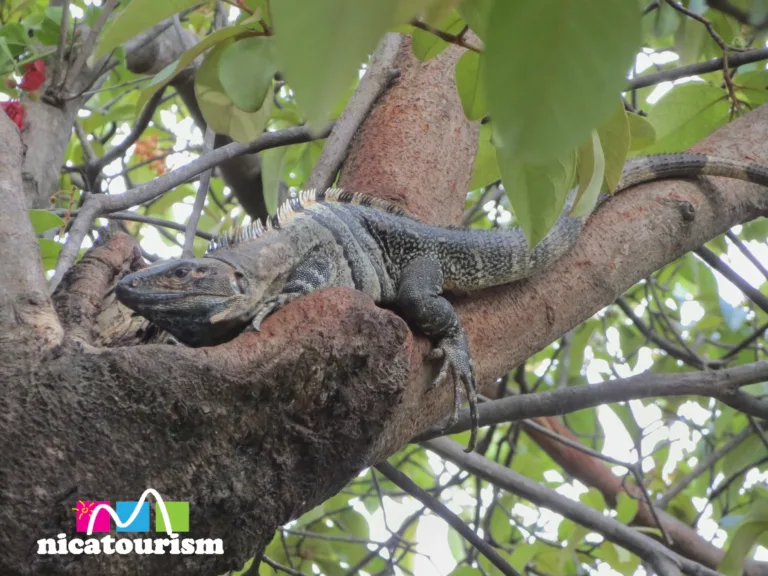
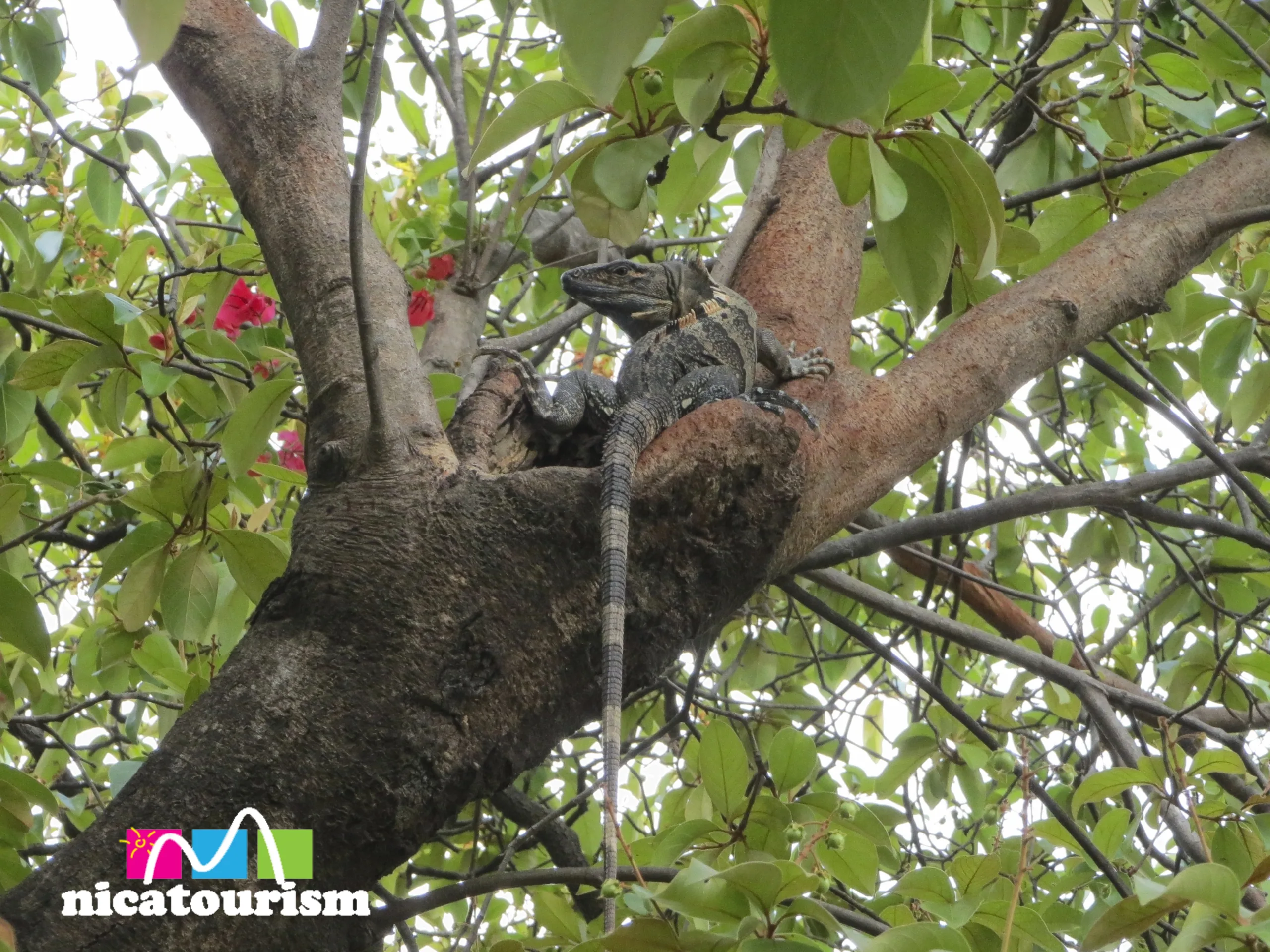
I am not an expert on reptiles so I can’t tell you if this is a Nicaragua iguana or a Nicaragua garrobo but it is a nice little friend that lives on the same property we do. He/she has become quite “tame” or curious as you will. We both were looking at each other for quite a bit yesterday. I am glad this place is fenced in or he/she would be eaten already as they are quite favored for their meat, in typical Nicaraguan dishes.
Nicaraguan garrobo and iguana are both reptiles, but they belong to different genera and have several differences:
Taxonomy:
Nicaraguan Garrobo: The Nicaraguan garrobo, also known as the black iguana (Ctenosaura similis), belongs to the genus Ctenosaura. It is a type of iguana, but it is not in the same genus as the green iguana.
Iguana: “Iguana” is a general term used to describe various species of iguanas. Green iguanas (Iguana iguana) are a well-known species of iguana, but there are several other species in the Iguanidae family, such as the black iguana (Ctenosaura similis).
Appearance:
Nicaraguan Garrobo: they are usually larger and bulkier than green iguanas. They have rough, spiny scales and are typically dark gray or black in color, which helps them absorb heat more efficiently.
Iguana: Green iguanas, as the name suggests, are often green in color, although they can vary in shades. They have a slender body, long tail, and a crest of spines along their back.
Habitat:
Nicaraguan Garrobo: These reptiles are commonly found in Central America, including Nicaragua, and are often seen in arid or semi-arid regions. They are excellent climbers and are frequently found in trees and rocky outcrops.
Iguana: Green iguanas are primarily found in Central and South America, as well as the Caribbean. They tend to inhabit more tropical and forested environments, including rainforests and coastal areas.
Diet:
Nicaraguan Garrobo: They are primarily herbivorous, feeding on leaves, flowers, fruits, and other plant matter. They may also eat insects and small vertebrates on occasion.
Iguana: Green iguanas are primarily herbivorous as well, with a diet consisting mainly of leaves, flowers, and fruits. However, they may also consume some insects and other small prey.
Behavior:
Nicaraguan Garrobo: These reptiles are known for their agility and are often seen basking in the sun. They are diurnal and are active during the day.
Iguana: Green iguanas are also diurnal and spend a lot of time in trees. They are known for their territorial behavior and may display dominance and aggression.
In summary, while both are reptiles, they differ in terms of taxonomy, appearance, habitat, diet, and behavior. The Nicaraguan garrobo is a specific species of iguana belonging to the genus Ctenosaura and is typically found in arid regions, while the term “iguana” can refer to various species within the Iguanidae family, with green iguanas being one of the most well-known species. Green iguanas are often found in tropical and forested environments.
Some places just know how to get it right, you know what I mean? Well, it’s official. My favorite restaurante in Managua, Nicaragua is El Eskimo. Sorry Restaurante Azul. I haven’t visited you as much as El Eskimo. I will work on that in the future.
I’ve gone to eat at El Eskimo 4 or 5 times. And this place just keeps growing on me. They don’t do anything wrong…let me explain. And yes, this is the Eskimo of Nicaraguan ice cream and dairy products. But this is their restaurant.
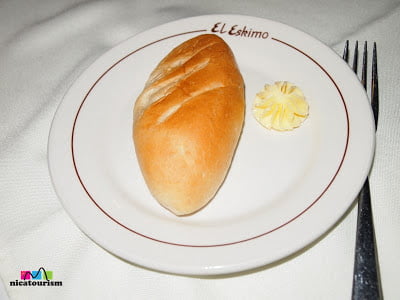
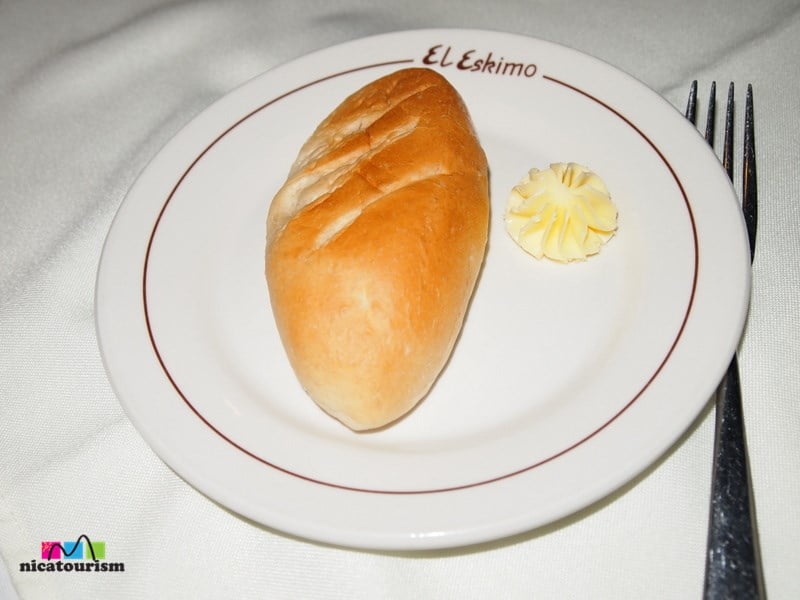
It’s not the newest restaurant by far. In fact, it’s decor is probably from the 60’s or early 70’s, Managua’s golden years. However, the maintenance is impeccable. Quality all around. The bathrooms smell cleaner than a swimming pool (a pool early in the day, that is). The waiters are very attentive. The food is really excellent! There is a mini salad bar that comes with your entrée. It’s small but tasty and the dill dressing is too die for! The fresh baked bread is soft and sweet, accentuated with the premium Eskimo Nicaragua butter on it. The plates are simple. I had garlic shrimp this time…I’m getting hungry just writing about them and that devilish butter garlic sauce they were swimming in. I told you before that the churrasco is really good. Well the shrimp are just as good. Now I don’t know what to order next time…probably will be eyeing the Italian shrimp….
To top it off, a waiter named Bayardo (an aquaintance) brought us over the clown sundae, courtesy of the house (or of him). It came in good shape…but the eyes slid down as we talked.
1 to 10: I am going to give it a 10 cause it’s my favorite! All others will be judged by El Eskimos’s time proven standards.
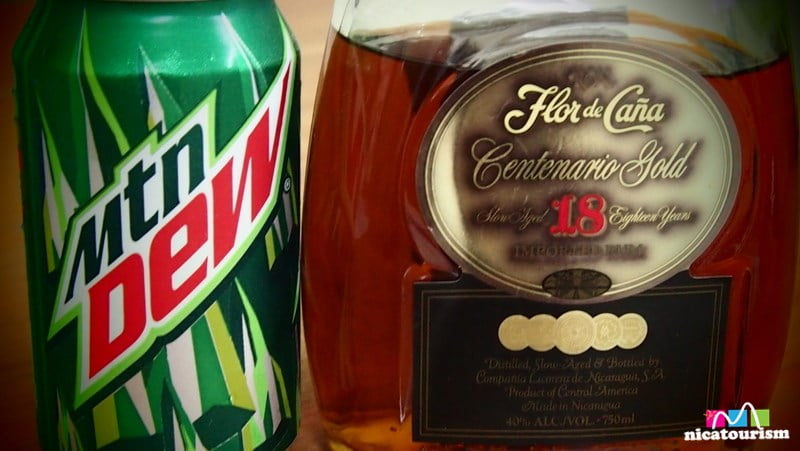
This is what I call the best of both worlds: a wonderful fusion of Mountain Dew and 18 year old fine, brandy-esque Flor de Caña sugar cane rum. Do you agree?
Some would say that it’s a sin to mix the 18 year old rum…I can’t disagree with them. It’s smooth sippin’ and you might just want to leave the Mountain Dew in the fridge…or save it for the 5 year batch….
Retro-themed design on a 12-ounce can of Mountain Dew Throwback from 2010. Current cans no longer say “limited time only”. (Photo credit: Wikipedia)
This week our friends at Eskimo Nicaragua ice cream decided to put their Paleta de Cocoa on sale for $0.20. It’s basically a fudgecicle (remember those) but a lot cheaper.
These were served with a friendly smile at the Eskimo ice cream store on the NW corner of Central Park in Chinandega, Nicaragua.
We need to gulp a few of these down daily as the temperatures have been in the high 90’s. And as you know, Chinandega, Nicaragua is one of the hottest parts of the country.
Las Colinas is a famous restaurant in Granada, Nicaragua. Their specialty is the whole guapote fish totally and almost miraculously de-spined. Oh and man is it good! The filet-o-fish (guapote too) are really good, especially the breaded ones with the garlic sauce on the side. It is not big on atmosphere but is so popular that many ex-presidents, Alejandro Fernández and Daniel Ortega have eaten there. Daniel usually drinks Coca Zero at room temperature. His wife, Rosario, drinks orange Fanta. The waiter told me so….
On a scale of 1 to 10, 8 for the fish which is excellent!
National Geographic explorer and archaeologist Alex Geurds is currently in the field investigating a prehistoric, ceremonial center of stone circles in Central Nicaragua. Researchers will be working for the next few weeks at the site of Aguas Buenas, located to north of the city of Juigalpa. In that area, stone and earthen mounds are visible at regular intervals. The Central Nicaragua Archaeological Project is an ongoing archaeological investigation to shed light on the prehistory of Nicaragua, in particular its extraordinary indigenous tradition of monumental stone sculptures and its poorly understood ceremonial complexes. As part of this, the Aguas Buenas archaeological site holds special interest. Recent explorations of the site have revealed its unequalled architectural characteristics and extraordinary number of mounds, spread out over the hilly Chontales landscape by means of wide concentric semi-circles. Current knowledge of prehistoric monumental architecture in Central America cannot tell us anything specific about why this site looks like it does. Nor is there a significant amount of previous archaeological research in the region to help us out in understanding Aguas Buenas. The 2013 field season features students from Leiden University, the National Autonomous University of Nicaragua and the University of Calgary, geared towards completing a GPS mapping of the site and excavating several of the more than 500 mounds. What are these mounds actually? When were they built and how? Do they serve a purpose as individual mounds or rather playing a role in the larger complex of the site itself? These are just some of the questions fuelling the effort to withstand scorching heat, prickly shrubs and the occasional snake and scorpion. Standing among the mound, one would never guess the 600-meter diameter semi-circular patterns these mounds clearly follow from an airborne perspective. Researchers determined the mound to be excavated by working on creating an understanding of when distinct sectors of the site may have been built and how comparable the contents of mounds really are. The excavation progress can be followed online.
On Monday, I took a drive on scenic South Highway (Carretera Sur) in Managua, Nicaragua. On my way back from El Crucero some evening a few months ago, I had seen what seemed to be an old fashioned style diner…and I found it again! It’s located at km. 8.5 Carretera Sur in the Centro Comercial La Liga.
As you can see, the decor is that of a 50’s diner, complete with the old Cadillac, actually a 1961 Fleetwood Seventy-Five (or the back end of it). You will be swooned with oldies in the background and, as was the case at lunch time on Monday, a really loud bunch of people waiting for their food.
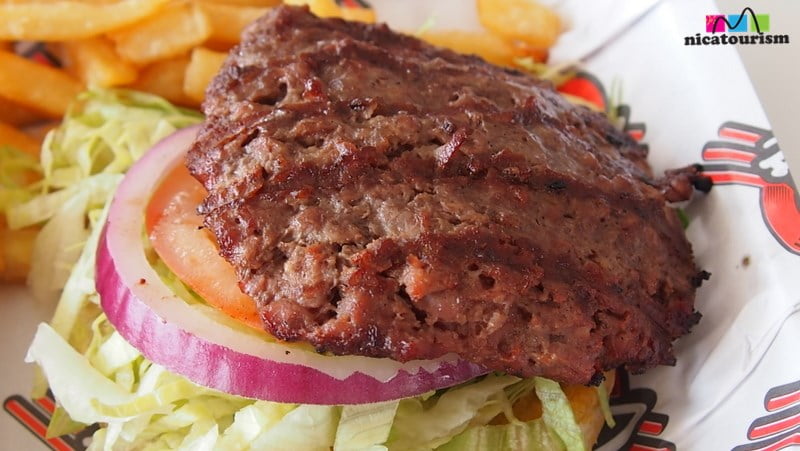
Service was good. José Luís was very attentive. The owner shows interest in her clients as well and speaks both English and Spanish. The best part, however, was the food. Can you believe that bunless hamburger in the picture? (Click on the picture to enlarge). It’s called the Light. I was like: “This doesn’t belong here. This looks like something from Restaurante Azulat Hotel Contempo in Managua”. It was absolutely beautiful… a hamburger! I ate the Classic (the other picture), which, as you can tell, is not made with common hamburger. Tasted like ground steak, char-broiled to perfection (6 oz. of meat claims the menu). I almost ordered a second one (but I’m on a diet).
Now, do I top it off with a milkshake or apple pie a la mode? Since my wife loves apple pie, apple pie it was. Delicious!!! And she’s pretty picky about her apple pie….
The Diner is a winner. The only thing I would like to figure out is when there are less people inside – it got real noisy. But, I guess that’s what diners are all about huh?
On a scale of 1 to 10, I give The Diner an 8 (excellent quality and preparation of the food won me over).