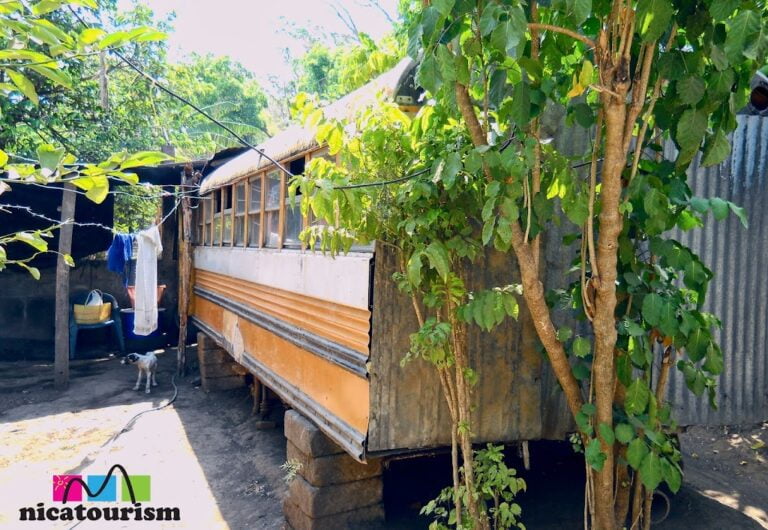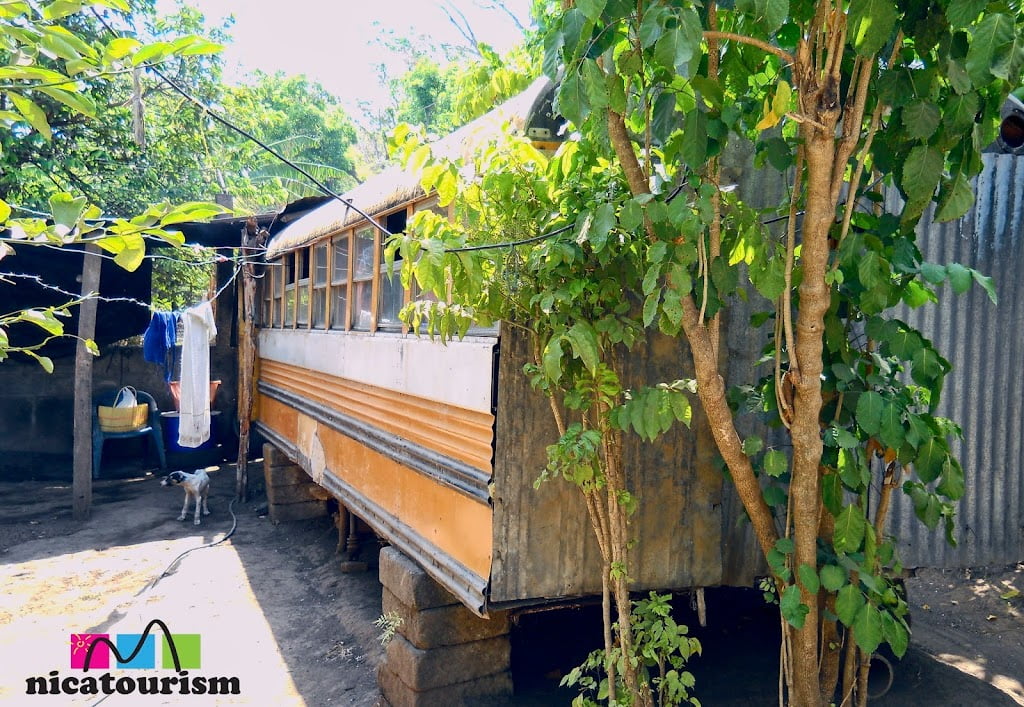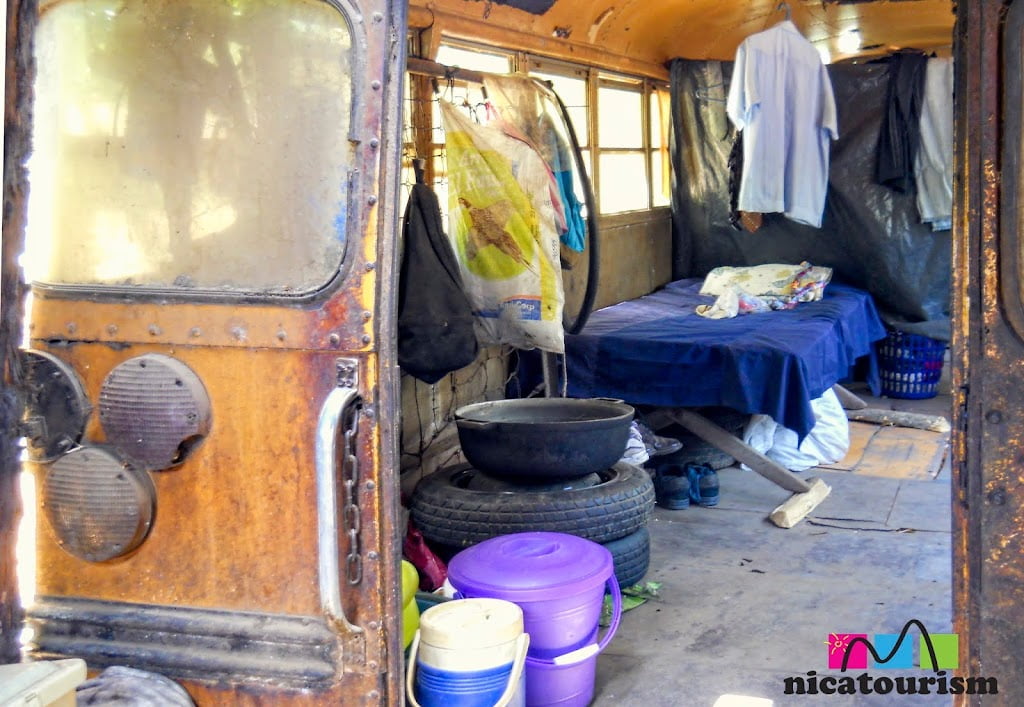


Have you ever thought about buying a school bus and converting it into a home? A school bus that was converted into a home in Nicaragua could be the answer to many housing problems.
¿Has pensado alguna vez en comprar un bus escolar y convertirlo en vivienda? Un autobús escolar convertido en hogar en Nicaragua podría ser la respuesta a muchos problemas de vivienda.
No estoy seguro cómo llegó este autobús escolar estadounidense a Caña de Castilla, Granada, pero el antiguo autobús escolar se ha convertido en un hogar acogedor para la familia del propietario. Esta podría ser una solución asequible para muchas familias que luchan con los altos costos de vida y la falta de espacio.
Si bien puede que no sea ideal para todas las familias, si está buscando ahorrar dinero en el alquiler o reducir el tamaño de su espacio habitable, ¡esto podría ser lo que está buscando!
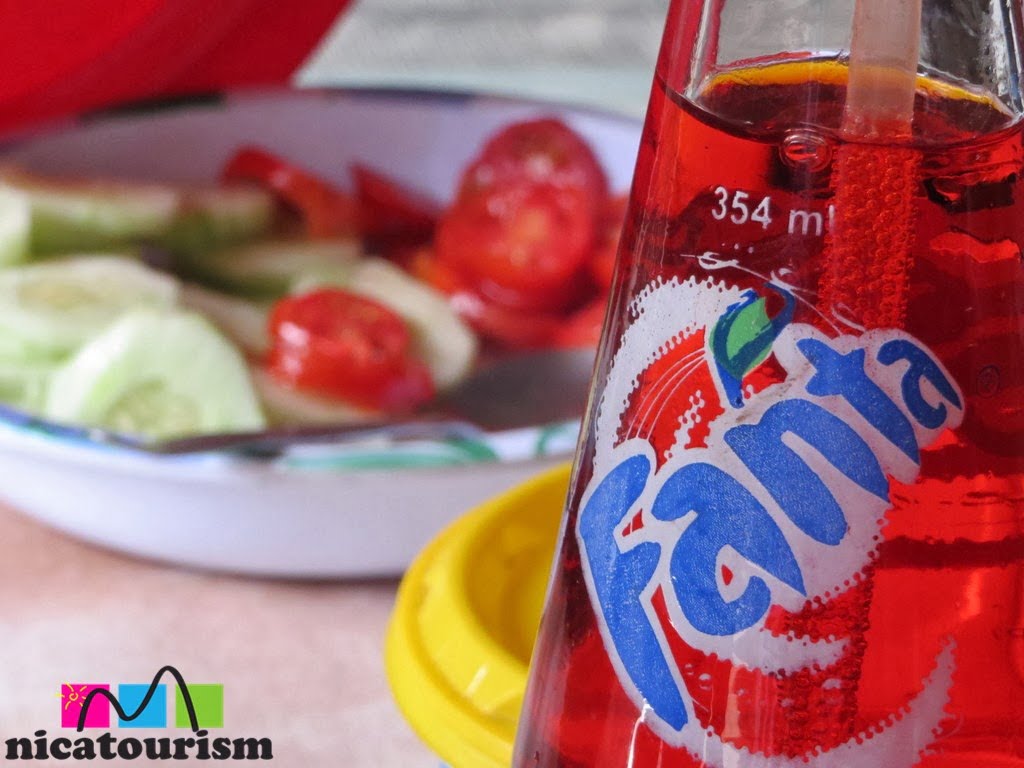
I ate at Doña Julia’s little lunch place on Wednesday, in the bowels of what was once the Managua Judicial complex. She was offering grilled heart or chicken. I opted for the chicken with rice, fried green plantains (tostones), salad and a Fanta roja (a Coca-Cola version of the Nicaraguan staple ‘Rojita’ – a carbonated beverage that tastes like sweet, bubbly rose water. This could set you back around C$40 plus C$10 for the drink.
The cuisine is known as one of the most diverse in Central America because it has close ties to European colonization. The African slave trade also influenced the food. This was due to the fact that many found themselves enslaved in Nicaragua’s fertile land and plantation farms.
Nicaraguan cuisine has roots in the pre-Columbian era. Indigenous groups like the Chibcha people used to eat corn, potatoes, beans and squash long before Spanish colonization began in 1521. It also includes grains and legumes from Africa like black-eyed peas or chickpeas.
Wherever it came from, Nicaraguan food is good!
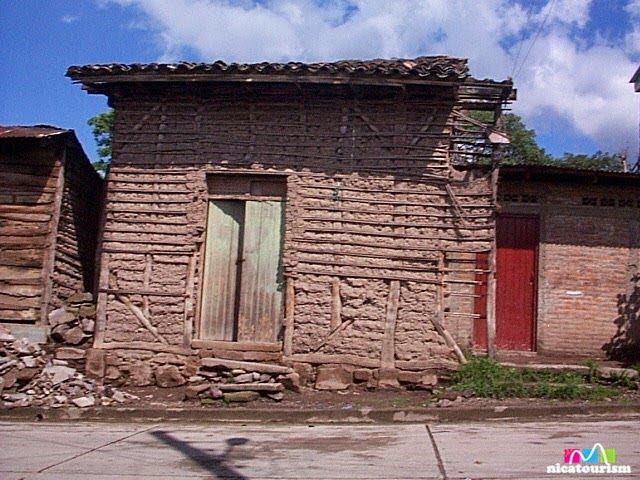
This is a typical construction in some parts of Nicaragua, dating back a few years. It’s made of wooden supports and mud. It’s surprising that these houses are actually cool inside and they last for years, despite the rain, wind, etc. However, in earthquake-prone areas (read most of the west coast in Nicaragua) these houses are slowly being destroyed because of the tremors.
Aquí está una construcción típica de algunos lugares de Nicaragua, obviamente de antaño. Se ha construido de soportes de madera y barro. Sorprendentemente las casas son bastante frescas y aguantan la lluvia, viento, etc. por años. Sin embargo, en zonas de riesgo sísmico (léase toda la franja occidental de Nicaragua) estas casas se van desapareciendo debido a los temblores.
7/23/09
Nicaragua flights aren’t only made by airlines. There exists many wonders of wildlife which provide opportunities for ample bird watching throughout the country. I remember being in the Nicaraguan capital of Managua and frequently seeing the turquoise-browed motmot, the Nicaraguan national bird (its local name is guardabarranco).
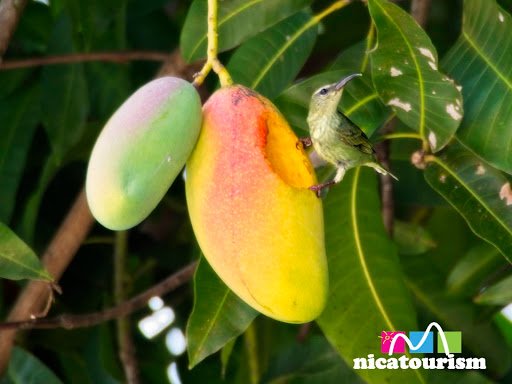
However, there is another smaller bird that is harder to find, unless you have binoculars for bird watching. It’s called the red-legged honeycreeper (mielero patirrojo o mielero colicorto). Recently, I was able to capture a pair of these birds, male and female, feasting on a mango. The well mannered blue honeycreeper would sit back on a branch waiting for his green colored mate to eat. When she would leave, he would come and eat. When she came back, he again moved off to the side and let her eat…they did this for several minutes and took quite a bite out of that mango. It was a beautiful bird watching opportunity. If you keep your eyes open, I imagine this scene repeats itself wherever you point to on a Nicaragua map.
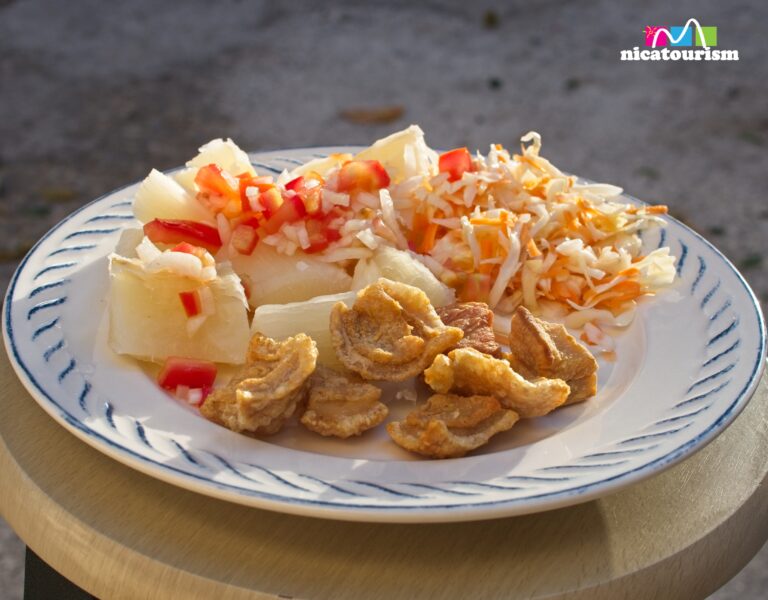
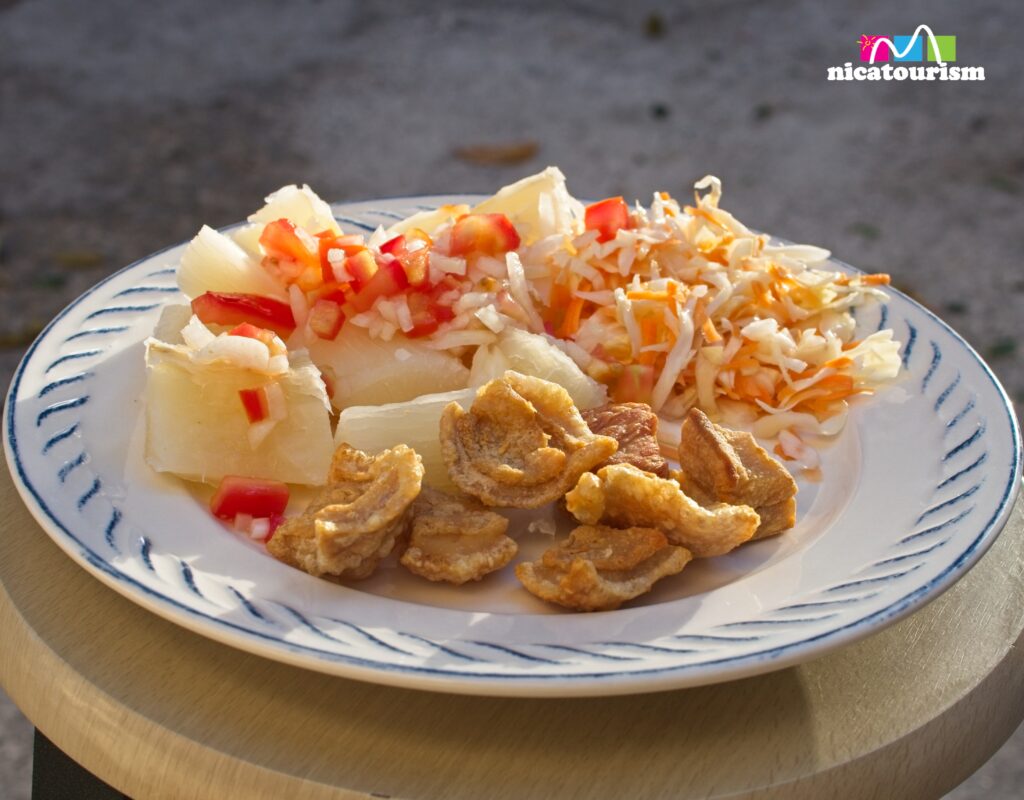
If you look on a Nicaraguan map in search of places where tropical fruits grow, you would find them everywhere. Exotic fruit is common in Nicaragua. For example, there are at least 500 and perhaps as many as 1,000 different varieties of mangos in the world. I don’t have an exact answer but Nicaragua must have at least 20 varieties of these luscious tropical fruits…and the Nicaraguan population loves them. Even in the capital of Nicaragua, Managua, it is common to find mango trees in abundance. Well, let me share some pictures of this delight which, in fact, in found throughout Central America.Ingredients:
For the Yuca:
For the Chicharrón:
For the Curtido (Cabbage Salad):
Instructions:
1. Prepare the Yuca:
2. Prepare the Chicharrón:
3. Make the Curtido (Cabbage Salad):
4. Assemble the Vigorón:
5. Serve:
Vigorón is a delicious and satisfying dish that combines the creamy texture of yuca, the crispy goodness of chicharrón, and the tangy crunch of curtido. Enjoy your taste of Nicaragua!
La verdad que es una buena combinación de ingrediantes, especialmente si se puede conseguir el chicharrón con un poco de carnita…luego con una Pepsi helada…y vas de viaje!
Click here to see more details about how to prepare pork rinds.
Here are some other creative recipes for pork rinds.

There are Mango trees all over Nicaragua and nary a mango goes to waste, at least not at the start of the mango season. Nicaraguans love mangos…in fact, as the trees begin to produce fruitage, green mangos are not spared as they are enjoyed for their tart flavor. As the season progresses, these green mangos begin their transformation into the sweet, succulent flavors that are highly esteemed throughout Nicaragua and many other places around the world.